
By Quoracy Editorial Team
Long before modern management gurus penned bestselling books on executive leadership, organizational design, or span of control, a Midianite priest named Jethro delivered what might be history’s first documented management intervention.
Found in Exodus 18, this ancient exchange between Moses and his father-in-law presents a timeless diagnostic of operational failure and offers a blueprint for organizational scaling that has reverberated across three millennia—shaping Jewish jurisprudence, Christian ecclesiology, military command structures, and modern corporate enterprise.
The Genesis of Burnout: Exodus 18
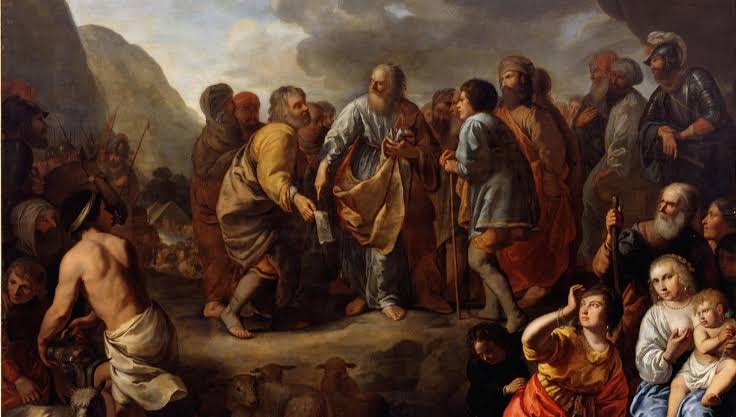
When Jethro visited Moses in the wilderness after the Exodus from Egypt, he observed a scene all too familiar to modern startup founders and overworked executives. Moses sat as the sole judge over an entire nation, adjudicating every dispute from dawn until dusk.
Jethro’s assessment was swift and blunt:
“What is this thing that you are doing for the people? Why do you alone sit as judge, while all the people stand around you from morning until evening? … What you are doing is not good. You and these people who come to you will only wear yourselves out. The work is too heavy for you; you cannot handle it alone.”
— Exodus 18:14, 17–18
Moses was suffering from classic Founder’s Syndrome: single-point-of-failure vulnerability, operational bottlenecking, and imminent leader exhaustion.
Jethro proposed a four-part restructuring framework:
- Focus on Core Executive Mandates: Moses would act as the mediator between the people and God, focusing on teaching the core laws and setting overarching strategy.
- Define Leadership Criteria: Select capable leaders who were trustworthy, God-fearing, and possessed high integrity (Exodus 18:21).
- Establish a Tiered Hierarchy: Create structured bands of authority—appointing leaders over thousands, hundreds, fifties, and tens.
- Implement Management by Exception: Lower-level leaders resolved standard disputes; only complex, precedent-setting “hard cases” were escalated to Moses.
Moses accepted the advice, creating a decentralized operational engine that preserved his energy and established social order.
1. The Golden Thread: Rabbinic and Jewish Thought
In Rabbinic tradition, Jethro’s intervention is viewed not merely as practical advice, but as a crucial step in the development of rule of law and judicial efficiency.
- The Great Sanhedrin: Classical Jewish jurisprudence evolved Jethro’s system into the hierarchical court structure culminating in the Sanhedrin (the supreme judicial council). Lower courts (Beit Din) of 3 or 23 judges handled local monetary and civil matters, while only questions of profound national or religious importance reached the 71-member Great Sanhedrin in Jerusalem.
- Maimonides (Rambam): In his foundational legal code, the Mishneh Torah, Maimonides codified the principle of delegation, emphasizing that a leader who refuses to appoint sub-judges violates the fundamental spirit of communal stewardship.
- Pirkei Avot (Ethics of the Fathers): Jewish wisdom literature continually reinforces shared burden, stating: “You are not obligated to complete the work, but neither are you free to desist from it” (Avot 2:16)—a direct call against centralized heroic leadership.
2. Early Church Governance: Protecting the Mandate
When the early Christian community expanded rapidly in Jerusalem, the Apostles faced an operational crisis directly echoing Moses’ dilemma.
In Acts 6:1–7, administrative complaints arose regarding the daily distribution of food to widows. Rather than expanding their own working hours to oversee logistics, the Apostles recognized that doing so would compromise their core mandate:
“It is not right for us to neglect the ministry of the word of God in order to wait on tables… We will turn this responsibility over to them and will give our attention to prayer and the ministry of the word.”
— Acts 6:2, 4
This led to the appointment of the seven deacons—a direct application of Jethro’s model. Later, as the movement expanded across the Greco-Roman world, the Apostle Paul instituted a decentralized leadership network of elders (presbyteroi) and overseers (episkopoi) to pastor local assemblies autonomously (Titus 1:5; 1 Timothy 3).
3. Military Strategy: Mission-Command and Span of Control
Throughout history, armed forces learned that centralized control during battle leads to catastrophic failure. The principles Jethro laid out became fundamental doctrines of military management:
- Span of Control: Jethro’s division into units of 10s, 50s, 100s, and 1,000s directly aligns with modern military organization—from squads and platoons up to companies and regiments.
- Auftragstaktik (Mission-Type Tactics): Developed by the Prussian military in the 19th century and adapted globally today as Mission Command, this doctrine instructs commanders to tell subordinates what to achieve and why, leaving the how to front-line officers who possess immediate tactical context.
- Escalation Protocols: Front-line officers execute standard rules of engagement, while high-value operational decisions escalate up the chain of command.
4. Today’s Corporate Executive Suite
In the 21st-century corporate landscape, Jethro’s ancient advice remains the cornerstone of organizational agility and executive health.
| Biblical Hierarchy (Exodus 18) | Modern Corporate Equivalent | Primary Operational Responsibility |
| Moses | Chief Executive Officer (CEO) / Board | Vision, culture, core strategy, and high-stakes exceptions |
| Leaders of Thousands | Vice Presidents / Business Unit Heads | Strategic business unit management and multi-team oversight |
| Leaders of Hundreds | Directors / Senior Managers | Departmental operations, resource allocation, and program delivery |
| Leaders of Fifties | Team Leads / Frontline Managers | Day-to-day team execution and cross-functional coordination |
| Leaders of Tens | Project Coordinators / Squad Leads | Direct mentoring, daily task completion, and frontline dispute resolution |
Modern application of Jethro’s principles manifests across four key corporate domains:
- Management by Exception (MBE): Automated dashboards and delegated authority handle routine operations. Executives intervene only when key performance indicators (KPIs) deviate beyond acceptable tolerances.
- C-Suite Focus (Strategy vs. Execution): Like Moses shifting to teacher and mediator, modern CEOs must transition from micro-managing operations to setting culture, defining vision, and removing strategic roadblocks.
- Empowered Decoupling: Modern enterprise frameworks (such as Spotify’s Squad model or Amazon’s Two-Pizza Teams) mirror Jethro’s small-group delegation, enabling rapid, autonomous decision-making without constant executive approval.
- Executive Sustainability: Jethro identified burnout millennia before it became a workplace metric. Effective delegation is not just about efficiency—it is an act of risk mitigation that protects executive longevity and team morale.
Conclusion: The Ultimate Executive Question
Jethro’s challenge to Moses remains the ultimate diagnostic question for every modern leader, founder, and manager:
“Why are you doing this all yourself?”
Whether leading ancient tribes through the desert, guiding early spiritual communities, commanding troops, or scaling a tech enterprise, the law of delegation remains immutable: To scale your impact, you must decentralize your authority.
Published on Quoracy.com | Leadership & Governance Series

