61 year-old UK origin Chartered Accountant and business consultant, and of late hotelier, who loves languages, literature, history, religion, politics, internet, vlogging and blogging and lively written or spoken discussion, plays backgammon and a few other board games. Walks and listens to Audible for hours a day usually, and avoids use of the car. Conservative Christian, married to an angel with advanced Multiple Sclerosis. We have three kids, two of them autistic, and we live in the forest near Zielona Góra, Poland. We have a small hotel called Agroletnica which you can book either on Agroletnica.com or on Booking.com. David has own consultancy called Quoracy.com delivering business governance and audit/valuation solutions as well as mentoring. Author of the GoldList Method for systematic optimal use of the long-term memory in learning. We have two greater Swiss Mountain dogs, nine cats, bees and a fine collection of tropical fishes.
A Reflection in Response to the 2025 U.S. Government Shutdown
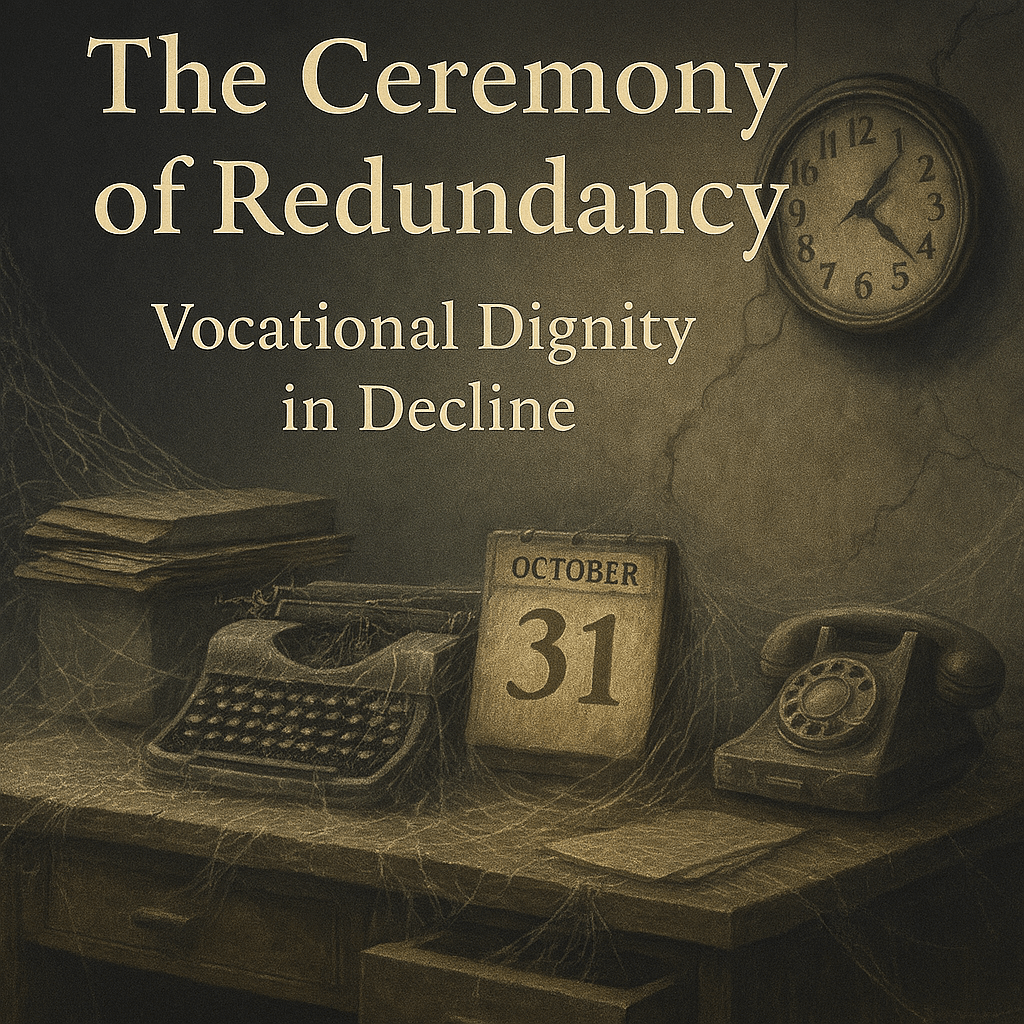
As the United States enters its first phase of government shutdown, since 2018, President Trump has made clear his intention: this is not merely a budgetary standoff, but a strategic purge. He has stated that the shutdown will serve as a “natural weeding-out process” for roles deemed unnecessary—a sentiment echoed by the Department of Government Efficiency (DOGE), now operating in post-Musk inertia.
But beneath the political theatre lies a deeper societal wound: the erosion of vocational dignity when need becomes ceremonial, not operational.
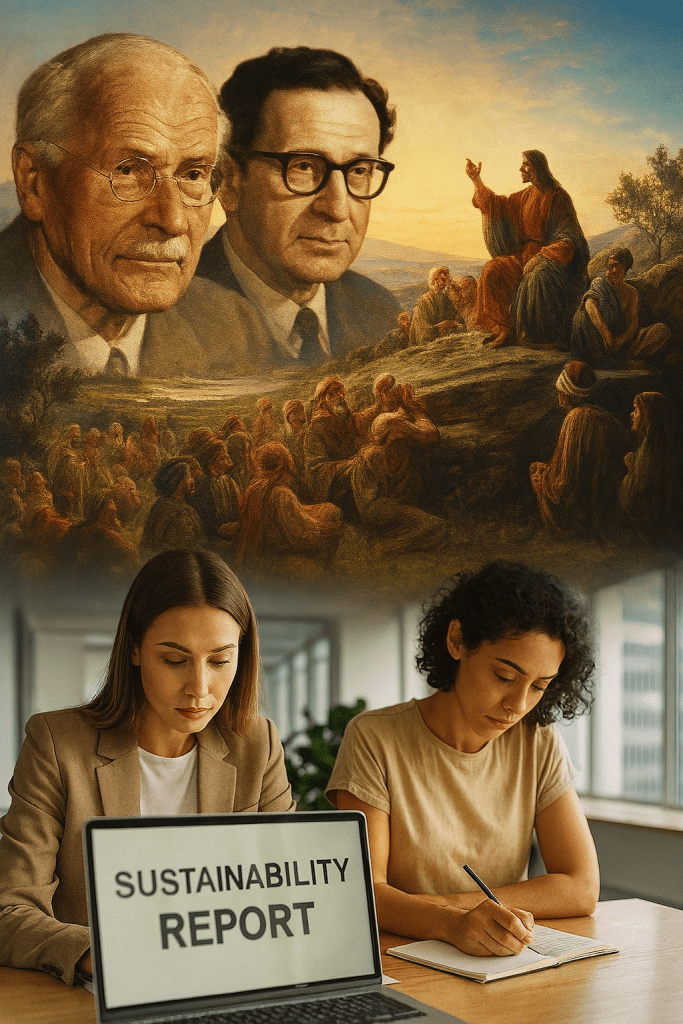
In the age of sustainability disclosures and corporate transparency, the European Sustainability Reporting Standards (ESRS) S1–S4 present themselves as technical instruments—legal scaffolding for social accountability. But beneath their regulatory veneer lies a deeper philosophical current: a challenge not merely to comply, but to go beyond expectations. To act, as Jesus once said, not just in reciprocity, but in grace. This essay traces the intellectual lineage of that challenge, from the Gospel of Luke to Carl Gustav Jung, through Eric Berne, and into the heart of modern ESG.
The “What Thank Have Ye?” Principle
Jesus’s words in Luke 6:32–35 are a direct rebuke to transactional morality:
“If ye love them which love you, what thank have ye? for sinners also love those that love them. And if ye do good to them which do good to you, what thank have ye? for sinners also do even the same.” (Luke 6:32–33, KJV)
Poland is booming—and we’re ready to welcome you! 🇵🇱✨
The Economist just called Poland a growth engine of Europe, and there’s never been a better time to experience its momentum firsthand. Whether you’re visiting for business or leisure, there’s no better way to see this dynamic country than from the ground up—by car, through its scenic landscapes and vibrant cities.
At Agroletnica, we’re more than just an inn. Nestled at the edge of the Zielonogórski Ridge, surrounded by peaceful forests and stunning views, we serve as your threshold to Poland. Conveniently located between Poland and Western Europe, we offer unmatched value in hospitality, making us the perfect stop on your journey.
Whether you’re an entrepreneur exploring new opportunities or a traveler seeking Poland’s natural beauty, Agroletnica is your home along the way.
📍 Join us for a stay that sets the tone for your Polish adventure. Poland is open for business—see it for yourself!
When nations divide, it is often marked by conflict, hostility, and prolonged instability. Yet in 1993, Czechia and Slovakia achieved something extraordinary—their Velvet Divorce was a model of peaceful, diplomatic separation.
Despite its success, the architects of this historic moment—Václav Klaus and Vladimír Mečiar—were never recognized with the Nobel Peace Prize. In failing to honor their achievement, the international community has overlooked one of the finest examples of nonviolent resolution in modern history.
Why the Velvet Divorce Matters Today
The peaceful separation of Czechoslovakia was not merely a technical agreement. It was a bold diplomatic feat, proving that nations can change course without resorting to war. The lessons from CzeSK remain deeply relevant, especially as the world grapples with territorial disputes in places like Ukraine, where divisions remain sharp. Had the global community insisted on a structured, diplomatic separation rather than war, Ukraine might have had a different path forward—one that avoided the destruction we see today.
A Late but Necessary Nobel Recognition
More than 30 years have passed since the Velvet Divorce, but it is not too late to correct history. A retrospective Nobel Peace Prize for Klaus and Mečiar would elevate their achievement as a model for the future, reinforcing the idea that conflict can be avoided through careful negotiation, mutual respect, and structured separation.
A precedent exists—historical recognitions have happened before. A Nobel awarded for the Velvet Divorce would be unprecedented, but it would also be a sign of humility from the Nobel Committee—acknowledging a missed opportunity and reigniting conversation about diplomatic solutions to modern crises.
How to Make It Happen
We can bring this idea to the forefront by:
Starting petitions to formally request Nobel recognition.
Encouraging discussion among scholars, diplomats, and policymakers.
Highlighting the relevance of peaceful separation in ongoing conflicts.
The world needs more diplomatic solutions and fewer wars. Honoring the Velvet Divorce is a step toward ensuring history remembers the value of peace before conflict ever begins.
I hope this letter finds you well. I am writing to express my concerns regarding the recent changes to compulsory purchase orders (CPOs) and the concept of “hope value” in land valuation.
While I understand the government’s intention to manage public project costs effectively, I believe that excluding hope value from CPO compensation creates inconsistencies in land valuation practices. If hope value is excluded for CPOs, it should also be excluded from the valuation of land for business rates and council taxes. This would ensure a fair and transparent system, where landowners are not disadvantaged by contradictory valuation methods. If a business’s rateable value of land is low, then owners cannot complain if that becomes the basis for compensation on a CPO, and by the same token, the state should not be giving back a lower value than the one they themselves set for the purposes of council taxes. Government should be consistent, and I am not sure that provision for this has been included in the legislation.
Furthermore, I propose that a moral payment be considered to cover the costs of rearranging investments around the affected property. This would acknowledge the broader impact on landowners beyond the immediate land value.
The term “hope value” is a neologism and not one found in any accounting standards, national or international. Moreover, it seems designed to be used exclusively by the government in their own favor against private investors. If private investors were to insist that the aspirational aspect of value be removed from market values, no deal would ever be made. As such, this is a fresh case of state exceptionalism in an area where state exceptionalism is not warranted.
Consistency in valuation practices across different governmental processes is crucial to ensure fairness and maintain public trust. I urge you to consider these points and advocate for a more balanced approach to land valuation and compensation.
Сегодня в западном мире День святого Валентина 2025 года, и поэтому некоторые люди могут подумать: «Что этот человек делает, гадая или предполагая, что может произойти в геополитике, вместо того, чтобы сосредоточиться на заказе карри или выполнении любых других дел, которые люди делают в День святого Валентина?». Таким я говорю, День святого Валентина — это также день, когда мы вспоминаем значимую одноименную резню, и поэтому для того, чтобы показать путь вперед, который мог бы остановить продолжающуюся серию резни и предотвратить гораздо большее, я хотел бы вынести на публичную арену, и не в первый раз, свои взгляды на то, как следует решать текущую европейскую ситуацию между Трампом и Путиным.
По сути, я говорю одно и то же с 2014 года, как знают те, кто следил за моими видео тогда или за моими заявлениями по случаю в социальных сетях с тех пор. Если посмотреть на границу, где сейчас находится конфликт на Украине, то можно увидеть, что она движется почти точно к той границе, которую я предвидел еще тогда, и точный подсказчик того, где находится эта граница, можно увидеть на двух картах ниже.
Они взяты из Википедии, они точно показывают, что в двух отдельных случаях Украина продемонстрировала, что в восточных и южных областях было более 60% (во всех случаях) поддержки русофила Януковича, и обратное было верным, когда западнические кандидаты Тимошенко/Омельченко были предпочтительны более чем 60% в каждой из северных и западных областей.
Решения, определяющие поколение, нацию, были приняты в двух случаях в Великобритании по результатам референдума, гораздо менее ясным, чем эти, в случае как референдума о независимости Шотландии, так и референдума о Brexit. Здесь у нас на Украине есть ясная карта — две ясная карта с разницей в шесть лет — показывающая два направления в том, что называлось одним народом.
Различные наблюдатели ни разу не утверждали, что на этих двух выборах была какая-либо нечестная игра, между прочим. Они, по-видимому, отражают волю народа. То есть они отражают две воли и два народа в одном государстве.
В Советском Союзе это было частью raison d’État для существования второй сильной республики-партнера после России, чтобы оправдать самоидентификацию СССР как Союза Советских Социалистических Республик – с этой целью украинцы и грузины всегда били выше своего веса по сравнению с этническими русскими в Верховном Совете и в большинстве министерств. Сталин, кажется, был главным автором этого, и он изначально уступил территорию и статус республики Украине, его примеру следовали украинофил-русский Хрущев и настоящий украинец Брежнев большую часть оставшихся славных лет (если вы можете принять это ироничное использование термина «слава» в тех обстоятельствах) Советского Союза.
Чтобы это сработало, два разных человека были названы «украинцами». Люди, которые говорили на украинском языке, с одной стороны, которые в основном боролись с поляками и жили под польским государством большую часть своей истории, и русскоговорящие (включая тех, кто говорил на диалекте «суржук»), которые во многих случаях были казаками — довольно дикой этнической группой со своей собственной культурой, но которые считали себя частью русского континуума и были лояльны царю — с другой стороны. Помимо этих двух основных групп были этнические венгры и хасидские евреи в значительных количествах на западной стороне, и была особая нация, называемая крымскими татарами (не очень тесно связанными с татарской ордой — их язык близок к собственно турецкому, взаимопонимаем, по крайней мере, на письме, с турецким), которые были излишками лет сельджукской экспансии, и в прошлом Крым также был домом для людей, говорящих на готском языке. Итак, готский, восточногерманский язык, просуществовал там до конца 18 века, на тысячелетие дольше, чем где-либо еще. Там также жили люди из разных кавказских народов, а также различные немецкие группы, в стиле амишей. Но главные две нации, о которых идет речь, — это русскоязычные и украиноязычные.
В основном эти две этнические группы были очень дружелюбны. Украинцы были известны как «малороссы», и эти «малороссы» были найдены по всей Российской империи по мере ее расширения на восток. Украинский язык был принят на восток вплоть до Владивостока как язык меньшинства. Дружелюбие между всеми советскими народами было обязательным при коммунизме. Конечно, у людей было много предрассудков друг против друга, но было бы очень неразумно открыто заявлять о них. После распада Советского Союза изначально казалось, что эти дружеские отношения сохранятся, и, похоже, русская гордость — это главное, что задевает тот факт, что это не так.
Более того, после распада Советского Союза были даны определенные заверения относительно стратегических активов Советского Союза, таких как военные порты и атомные электростанции, которые должны были стать частью пакета активов и обязательств, которые, как было согласовано, перейдут к Российской Федерации после распада. Россия считает, что эти условия не были соблюдены, а также господство западных украинцев (которые даже во время Второй мировой войны при Бандере демонстрировали свою враждебность к русским) над восточными украинцами беспокоило их, я бы даже сказал, оскорбляло.
Также стоит отметить, что, насколько хорошо развивалась открытая свободная экономика в этих странах после отказа от коммунизма, все знают о российских олигархах, но недооцененная правда заключается в том, что олигархические и мафиозные тенденции в Украине были не лучше, чем в России, и в то время как ко второму десятилетию двадцать первого века Россия сумела добиться более справедливого распределения богатства, в котором никто не был особенно обижен, и довольно много законов начали копировать западные (например, запрет на курение, структура трудового права и законодательства о компаниях, НДС и т. д.), положение дел в Украине никуда не менялось быстро, что привело к ситуации, когда некоторые на Западе искали перемен, сближаясь с Европой, а на Востоке искали позитивных изменений, больше подражая России, и придерживались Януковича.
И именно поэтому никакой прочный мир невозможен, пока эти две страны не перестанут притворяться единой страной. То, что работает для Швейцарии, просуществовало 800 лет из-за кантональной системы. То, что работает в Бельгии, было падением испанских Нидерландов, управляемых инквизицией, и, честно говоря, сегодня это едва ли работает, но, по крайней мере, выдержало определенное испытание временем. То, что было склеено в рамках советской доктрины, которая потерпела неудачу, не должно рассматриваться как idee fix кем-либо. То, что две отдельные этнические группы показали, что они хотели в 2004 и 2010 годах, вероятно, за исключением Стокгольмского синдрома, все еще сегодня является самым большим ключом к тому, чтобы увидеть конец кровопролития.
Я потерял дорогих друзей, заявляя об этом – люди утверждали, что я слишком симпатизирую России, потому что говорю на этом языке и читаю ее литературу, имею там много друзей и работал там. Это не так. Я получил суровый опыт, о котором я рассказывал в другом месте во время Советского Союза, и у меня больше причин быть осторожным, чем у большинства здесь, в Польше, если я буду следовать собственному опыту. Это просто попытка найти решение проблемы двух наций в одной, которая не решится иначе.
Западные украинцы могут многое получить от того, что станут своим народом и их быстро пропустят в ЕС.
Я надеюсь, что некоторые влиятельные люди поймут это и позволят этому каким-то образом повлиять на то, что будет дальше. Если нет, то будет интересно посмотреть в ближайшие недели, насколько близко мое предложенное ниже соглашение отражает то, что на самом деле делается между президентом Трампом и президентом Путиным.
В «Искусстве сделки» Дональд Трамп призывает нас мыслить масштабно при заключении сделок, и именно поэтому мы должны попытаться разрешить прямо здесь и прямо сейчас ряд не слишком отличающихся друг от друга конфликтов с участием России и ее соседей, в которых есть значительные слои населения, идентифицирующие себя с Россией.
Сделка, которую я бы предложил, если бы я был Трампом
Продолжающиеся конфликты и геополитическая напряженность в Восточной Европе имеют далеко идущие последствия для региональной стабильности и глобальной безопасности. Для решения этих сложных вопросов необходимо рассмотреть всеобъемлющий мирный план, который сбалансирует политические, экономические и военные интересы. В этом предложении излагается многогранный подход к достижению прочного мира и сотрудничества в регионе.
1. Разделение Украины на два независимых государства по образцу выборов 2004 и 2010 годов.
Украина была центром конфликта из-за своих культурных, языковых и политических разногласий. Исторические электоральные предпочтения и культурные различия предлагают решение в разделении страны на два отдельных образования: Восточную Украину и Западную Украину.
Восточная Украина : больше сближается с Россией и может присоединиться к Содружеству Независимых Государств (СНГ).
Западная Украина : больше сближается с Европой и может присоединиться к Европейскому Союзу (ЕС). Это можно было бы сделать легче, чем если бы Украина была такого размера, как сейчас.
Нейтральность : как Восточная, так и Западная Украина останутся военно нейтральными и не будут входить ни в один военный альянс, что снизит риск дальнейшего конфликта. Только миротворцы ООН будут иметь там военное присутствие и то в минимально необходимых уровнях.
2. Этнические и культурные соображения
Признание культурных и языковых различий в Украине имеет решающее значение для прочного мира. Для решения проблемы потенциального перемещения можно реализовать контролируемую схему обмена домами онлайн на недвижимость схожей ценности, что позволит людям переехать в регион, который соответствует их идентичности, в течение определенного количества лет (максимум семь), после чего она прекратится. Фактическое место жительства затем определяет гражданство.
3. Территориальные корректировки
Приднестровье : Этот регион может либо стать частью Восточной Украины, либо стать независимым государством. Это может позволить остальной части Молдовы больше соответствовать ЕС, спонсируемому Румынией. Таким образом, она могла бы войти в него легче, чем в ее нынешнем виде с конфликтной зоной Приднестровья. Молдова mius Приднестровье будет быстро отслеживаться путем применения acquis communautaire .
Крым : возвращается в состав новой Восточной Украины Россией или становится отдельной страной в СНГ, желательно нейтральной в военном отношении с Черноморским флотом РФ, переведенным в Сочи.
4. Включение Абхазии, Калининграда и Турции
Разрешение других региональных проблем имеет важное значение для всеобъемлющего мира:
Абхазия : Признана как отдельная страна, свободно вступающая в СНГ, но не в военный союз. Грузия присоединяется к ЕС, снова ускоренно, но не в НАТО.
Калининград и Турция :
Турция : остается в НАТО, но может свободно присоединиться к российскому экономическому альянсу, поскольку вряд ли станет легким партнером в ЕС.
Калининград : присоединяется к ЕС, но остается в российском военном альянсе, способствуя экономическому и военному равновесию.
5. Экономический и военный баланс
Создание взаимных интересов в различных альянсах может снизить вероятность конфликта:
Россия : приобретает долю в ЕС через Калининград.
Турция : получает долю в российском экономическом альянсе, оставаясь при этом в НАТО.
СНГ, ЕС и Австралия и Северная Корея предоставят друг другу режим благоприятствования в торговле и образовательном обмене, а также будут сотрудничать в борьбе с международной преступностью и терроризмом.
6. Запрет конфликта и снятие санкций
Запрет конфликтов : запретить конфликты в Европе на оставшуюся часть 21-го века, нарушения которых приведут к уступке частей Украины. Все дальнейшие переговоры и территориальные споры будут отложены на 75 лет, а затем решены сначала дипломатическим путем.
Снятие санкций : Снять все санкции с России и Беларуси после подписания соглашения. Санкции являются наказанием частного сектора государственным сектором, на чьей бы стороне они ни были, и должны применяться только тогда, когда нет другого выхода, и должны быть сняты как можно скорее.
7. Восстановление усилий
Реинвестирование : обещание 10% дополнительных экономических выгод (10% роста ВВП после снятия санкций) на восстановление инфраструктуры на востоке и западе Украины на высоком уровне соответствующими спонсорами каждой новой украинской страны.
Газа и Черное море как развитие Ривьеры : участие США в восстановлении Газы все еще возможно, поскольку ущерб Западной Украине от войны был меньше, чем Восточной. Россия и ее партнеры по СНГ должны сосредоточиться на инвестициях в Восточную Украину и Черное море как Ривьеру)
Западная Украина : Восстановительные работы под руководством ЕС и AUKUS. Контракты на восстановление справедливо распределены на основе расходов, понесенных во время конфликта.
Восточная Украина : восстановление контрактов, открытых для России, ее экономических союзников, Турции и стран БРИКС.
Заключение
Этот всеобъемлющий мирный план направлен на баланс экономических, политических и военных интересов, способствуя долгосрочной стабильности и сотрудничеству в Восточной Европе. Решая основные культурные и геополитические разногласия и продвигая взаимные интересы в различных альянсах, этот план предлагает прагматичный подход к достижению прочного мира в регионе.
Уступка частей Украины с редкоземельными металлами, как мы надеемся, может быть смягчена для Запада консолидацией ресурсов Гренландии, как это в настоящее время обсуждается, будь то путем присоединения к США или аренды. Включение Канады в США может быть сделано только в том случае, если этого пожелает канадский народ, но это должно быть сделано путем референдума на уровне каждой провинции, и одиннадцать канадских провинций или столько из них, кто этого пожелает, станут американскими штатами, Канада не станет «51-м штатом». Права представительства постканадских штатов должны основываться на том, сколько избирательных мест они имели бы, если бы они были в США с самого начала.
В основном сделка должна была бы иметь эффект снятия отношений НАТО/Россия с нынешнего лезвия ножа и позволить вернуться к мирным и плодотворным отношениям между двумя блоками. Она фактически вывела Россию из Гога и вернула ее в Магог, где находится большинство читателей текущей статьи, если они только знали об этом. Но об этом подробнее в другой раз. Достаточно сказать, что вопросы китайско-российской границы, а также японские вопросы были исключены из этого обсуждения. У государств Восточной Азии есть шанс увидеть, как здесь предлагается сделка, если она хоть немного похожа на то, что происходит, а затем построить что-то в том же или другом направлении в зависимости от того, чего они хотят.
Today is Valentines Day 2025, in the Western world, and so some people might be thinking, “what is this person doing second guessing or suggesting what could happen in geopolitics instead of concentrating on ordering curry or doing any of the other things people do on Valentines Day?”. To such I say, Valentines Day is also a day in which we remember a significant eponymous massacre, and therefore in order to show a way forward which might stop an ongoing set of massacres and prevent quite a lot more, I would like to place to the public arena, and not for the first time, my views on how the current European situation should be addressed between Trump and Putin.
In essence I have been saying the same things since 2014, as those who follwed my videos back then or my occasion statements in Social Media since then will know. Looking at the borderline fo where the conflict in Ukraine now is, it is moving almost exactly towards the borderline I foresaw even back then, and the dead giveaway for where this borderline belongs can be shown by the below two maps
These are taken from Wikipedia, they accurately show that on two separate occasions Ukraine demonstarted that in the eastern and southern oblasts there was over 60% (in all cases) support for Russophile Yanukovitch and the converse was true with the Westernising Timoshenko/Omelchenko candidtaes being preferred by over 60% in eacgh of the northern and western oblasts.
Generational, nation-defining decisions were made on two occasions in the UK over referendum results far less clear than these, in the case of both the Scottish Independence Referendum and the Brexit Referendum. Here we have in the Ukraine a clear map – two clear maps six years apart – showing the two directions in what was called one people.
The various watchdogs did at no time claim that there had been any foul play over either of these two elections, incidentally. They do presumably reflect the will of the people. That is, they reflect two wills and two peoples, in a single state.
In the Soviet Union it was part of the raison d’État for a second strong partner republic after Russia to exist so as to justify the USSR’s self-identification as a Union of Soviet Socialist Republics – to this end in fact Ukrainains and Georgians always punched above their weight vis a vis ethnic Russians in the Supreme Soviet and in most ministries. Stalin was it seems the main author of this, and he ceded initially the territory and republic status to Ukraine, his lead being follwed by Ukrainophile Russian Khrushchev and actual Ukrainian Brezhnev for most of the remainder of the glory years (if you can accept that ironic use of the term “glory” under those circumstances) of the Soviet Union.
For this to work, two different people were both named ‘Ukrainians”. People who spoke the Ukrainian language on the one hand, who had been largely wrangling with Poles and living under the Polish state for a lot of their history, and Russian speakers (including those with the “surzhuk” dialect) who were in many cases Cossacks – a rather wild ethnicity with its own culture but who regarded themselves as part of a Russian continuum and were loyal to the Tsar – on the other. Beyond these two main grouping you had ethnic Hungarians and Chasidic Jews in sizeable numbers on the western side and you had a special nation called the Crimean Tatars (not really closely related to the Tatar horde – their language is close to Turkish proper, mutually intelligible, at least in writing, with Turkish) who were an overspill of the years of Selcuk expansion, and in the past Crimea also was home to people speaking Gothic. So Gothic, an East Germanic langage, survived there until the late 18th Century, a millennium longer than it did anywhere else. People from the various Caucasian nations also had settlements there and also various German groups, Amish-style. But the main two nations that this is all about are the Russian speakers vs the Ukrainian speakers.
In the main, these two ethnicities had been very friendly. Ukrainian was known as “little Russian” and these “little RUssians” were to be found all over the Russian empire as it extended east. Ukrainian was taken as far east as Vladivostok as a minority language. Friendliness between all the Soviet peoples was obligatory under Communism. Of course people had plenty of prejudices against each other but it would have been very unwise to state them openly. After the break-up of the Soviet Union it appeared initially as though these friendly relations would continue and it seems that the Russian pride is the main one to be piqued by the fact that this is not so.
Moreover after the breakup of the Soviet Union certain assurances were given about the strategic assets of the Soviet Union such as military ports and nucelar power stations which were supposed to be part of the package of both assets and liabilities that were agreed to fall to the Russian Federation after the break-up. Russia feels that these conditions were not kept to and also the ascendancy of the West Ukrainians (who even during the Second World War under Bandera had shown their animosity to Russians) over the East Ukrainians worried them, I might rather say offended them.
It’s also worth noticing that as far as how well an open free economy was developing in these countries after giving up Communism, everyone knows about the Russian oligarchs, but it is an underreported truth that the oligarchy and mafia tendencies in Ukraine were no better than what could be found in Russia and whereas by the second decade of the twenty-first century Russia had managed to achieve a fairer distribution of wealth in that nobody was particularly hard done by, and quite a lot of laws started to mimic those of the west (for example smoking bans, the structure of labour law and company law, VAT, etc), the state of play in Ukraine was not going anywhere fast, leading to the situation where some in the West looked for a change by getting closer to Europe and in the East they sought positive change by emnulating Russia more, and adhered to Yanukovich.
And this is why no lasting peace is possible until these two nations stop pretending to be a single country. What works for Switzerland has lasted 800 years because of the canton system. What works in Belgium has been the fall out of the Spanish Netherlands run by the inquisition and to be honest barely works today, but at least has stood a certain test of time. What was patched together under a Soviet doctrine which failed ought not to be regarded as an idee fixe by anyone. What the two individual ethnicities showed that they wanted in both 2004 and 2010 would presumably, barring Stockholm Syndrome, still be today the biggest clue we have to seeing an end to the bloodshed.
I have lost dear friendships for stating this – people have stated that I have too much sympathy for Russia because of speaking the language and reading its literature, having many friends there and having worked there. This is not the case. I got a harsh experience which I have spoken about elsewhere during the Soviet Union and have more reason to be wary than most here in Poland if I were to go by my own experience. This is simply an attempt to find a solution to a two nation in one problem, which is not going to go away otherwise.
There is much for Western Ukrainians to gain from being their own people and fast-tracked into the EU.
It’s my hope that some people who are influential will pick up on this and allow it in some ways to influence what is coming next. If not it will be interesting to see in the coming weeks how close my proposed deal set out below reflects what is actually done between President Trump and President Putin.
In The Art of the Deal, Donald Trump urges us to think big when doing deals, and that’s why we should try to resolve right here and right now, a series of not dissimilar confliucts involving Russia and its neighbours in which there are sizeable Russian-identifying sectors of the population.
The deal I would propose if I were Trump
The ongoing conflicts and geopolitical tensions in Eastern Europe have had far-reaching consequences for regional stability and global security. To address these complex issues, it is imperative to consider a comprehensive peace plan that balances political, economic, and military interests. This proposal outlines a multi-faceted approach to achieve lasting peace and cooperation in the region.
1. Division of Ukraine into two independent countries along the lines suggested by the 2004 and 2010 elections
Ukraine has been a focal point of conflict due to its cultural, linguistic, and political divisions. Historical electoral preferences and cultural differences suggest a solution in dividing the country into two distinct entities: East Ukraine and West Ukraine.
East Ukraine: Aligns more with Russia and could join the Commonwealth of Independent States (CIS).
West Ukraine: Aligns more with Europe and could join the European Union (EU). This could be done more easily than if Ukraine were the full size it is now.
Neutrality: Both East and West Ukraine would remain militarily neutral and not part of any military alliance, reducing the risk of further conflict. Only UN peacekeepers would have a military presence there and at minimal levels required.
2. Ethnic and Cultural Considerations
Recognizing the cultural and linguistic differences within Ukraine is crucial for lasting peace. To address potential displacement, a supervised home-swapping scheme online for properties of similar value could be implemented, allowing individuals to relocate to the region that aligns with their identity, over a defined number of years (seven at the outside) after which it would cease. Factual residence then decides nationality.
3. Territorial Adjustments
Transdnistria: This region could either become part of East Ukraine or become an independent country. DOing so could enable the rest of Moldova more alignment with the EU sponsored by Romania. It could enter more easily that way than it could in its present shape with the conflicted zone of Transdnistria. Moldova mius Transdnistria would be fast tracked through applying the acquis communautaire.
Crimea: Returned to the new East Ukraine by Russia or becomes a separate country in the CIS, preferably militarily neutral with the Black Sea fleet of the RF moved to Sochi.
4. Inclusion of Abkhazia, Kaliningrad, and Turkey
Addressing other regional tensions is essential for comprehensive peace:
Abkhazia: Recognized as a separate country, free to join the CIS but not a military alliance. Georgia joins the EU, again fast-tracked but not NATO.
Kaliningrad and Turkey:
Turkey: Remains in NATO but free to join the Russian-based economic alliance, as unlikely to be an easy EU partner.
Kaliningrad: Joins the EU but remains in the Russian military alliance, fostering economic and military balance.
5. Economic and Military Balance
Creating mutual stakes in different alliances can reduce the likelihood of conflict:
Russia: Gains a stake in the EU through Kaliningrad.
Turkey: Gains a stake in the Russian-based economic alliance, while remaining in NATO.
CIS, EU and AUKUS to accord one another favoured status for trade and educational exchange, and co-operate on the combatting of international crime and terror.
6. Conflict Ban and Sanction Removal
Conflict Prohibition: Ban conflicts in Europe for the rest of the 21st century, with violations resulting in ceding parts of Ukraine. All further negotaitions and territorial disputes to be shelved for 75 years and then resolved at first diplomatically.
Sanction Removal: Lift all sanctions on Russia and Belarus upon signing the agreement. Sanctions are the punishment of the private sector by the public sector whichever side they are on and must be used only whgen there is no other way, and removed as soon as possible.
7. Rebuilding Efforts
Reinvestment: Pledge 10% of incremental economic benefits (10% of GDP growth after the removal of sanctions) to rebuild infrastructure in East and West Ukraine to a high standard, by the respective sponsors of each new Ukrainian country.
Gaza and Black Sea as a Riviera development: Engagement of the USA in rebuilding Gaza still possible as the damage to West Ukraine from the war has been less than the East. Russia and its CIS partners should concentrate on investment into East Ukraine and the Black Sea as a Riviera)
West Ukraine: Rebuilding efforts led by the EU and AUKUS. Contracts for rebuilding fairly shared based on the expenses undertaken at the time of the conflict.
East Ukraine: Rebuilding contracts open to Russia, its economic allies, Turkey, and BRICS.
Conclusion
This comprehensive peace plan aims to balance economic, political, and military interests, fostering long-term stability and cooperation in Eastern Europe. By addressing underlying cultural and geopolitical divisions and promoting mutual stakes in different alliances, this plan offers a pragmatic approach to achieving lasting peace in the region.
The ceding of the parts of Ukraine with rare earth metals can hopefully be mitigated for the West by the consolidation of Greenland’s resources as currently under discussion, whether by joining into the USA or by a lease. The inclusion of Canada into the USA to be done only if the Canadian people wish it but this should be done by referendum on a province by province basis and the eleven Canadian provinces, or as many of them that wish it, become American states, Canade does not become “the 51st state”. The rights of representation of post Canadian states should be on the basis of how many electoral seats they would have had if they had been in the USA from the beginning.
In the main the deal should have the effect of taking NATO/Russian relations off the current knife edge and allowing a return to peaceful and fruitful relations between the two blocks. It effectively taken Russia out of Gog and puts it back into Magog, where most of the readers of the current article are, if they did but know it. But more about that on another occasion. Suffice it to say that Chinese-Russian border issues as well as Japanese issues have been left out of this discussion. The East Asian states have a chance to see how the deal suggested here, if it is anything like what happens, and then construct something along the same or other lines depending on what they want.
You must be logged in to post a comment.