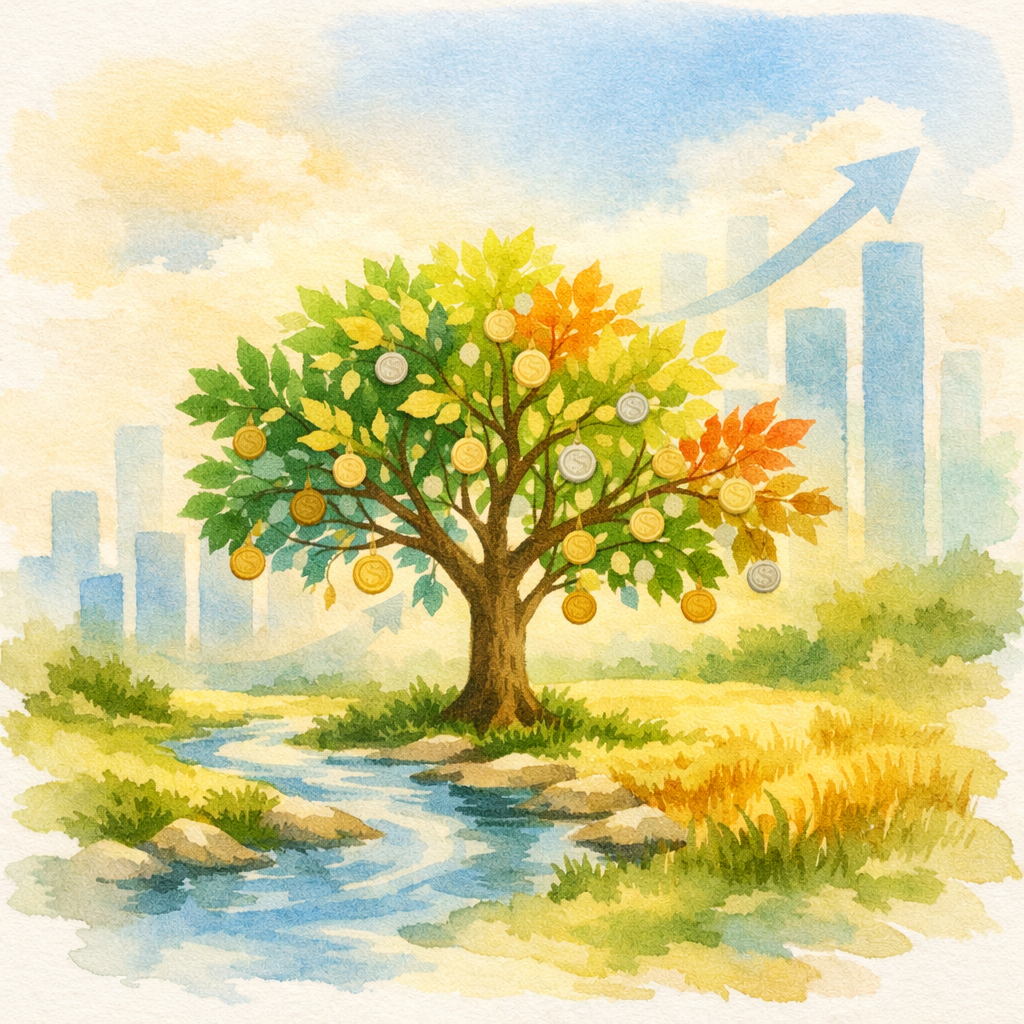
The Top Ten Best Investments You Will Ever Make
An Essay on Wealth, Time, and the Architecture of a Life
We spend much of adulthood thinking about “investments” — the ones we should have made, the ones we regret, the ones we hope will finally deliver. But the truth is that the highest‑yield investments are rarely the ones your bank manager talks about. They are the ones that compound across decades, protect your future, and shape the lives of the people you love.
This is not a list of financial products. It is a list of the ten most powerful ways a human being can invest in their future — in money, in time, in health, and in eternity.
Most of these assume that you have cleared any interest-bearing debts, and that you want to create a stor of wealt so that loved ones can have ongoing security after your own upgrade. The final one is about the actual upgrade.
None of this is personal financial advice and so you can’t sue me for anything. If you want some good advice, you should find a properly licensed accountant in each of the jurisdictions where you have a footprint. Usually that will be money well spent.
10. Your Home

A house is more than a structure. It is the anchor of your life: the place where your children grow, where your memories accumulate, where your identity settles. Financially, it is the quiet compounding engine that works even when you are not paying attention. Inflation lifts it. Scarcity protects it. And unlike most assets, you can live inside it.
A home that you love and a place you can feel safe and well is a baseline for many other of life’s good things.
A house is the first investment that teaches you the difference between price and value.
For most people, especially of an Anglo-Saxon mindset, the home is the biggest investment that they knowingly make, but in fact it is ony number ten on my list here today.
In many countries mortgage lending is the cheapest form of lending and also come with tax incentives, however one still has to avoid making basic errors around the mortgage loan. Such as, taking so-called “endowment” or “interest-only” mortgages, or mortgages framed in a currency which you have no natural hedge for, such as the swiss franc mortgages that used to be popular in Poland.
9. Land

Land is permanence in a world of flux. It feeds you, shelters you, and — if you are fortunate — gives you beauty. It is the original store of value, the asset that predates markets, currencies, and governments. Land is the one investment that connects you to the centuries.
I separated out land from home as people also have homes without land if they live in flats, as living with no actual land suits some people down to the ground. However owing a house iwth the land under it gives and additional layer of security, and also on land you can invest in such vital life protecting oinvestments as wells, fruit trees, poultry, things that keep your family going in times of dearth.
If there is over-population and shortage of land, its value raises. Where the population falls, land’s value also falls, but you still have a thing of beauty and peace which is a refuge and a connection with nature.
Both land and buildings, however, invlove sizeable costs to maintain properly, and having too much of either, more than one can reasonably handle is a classic error. Some of the advice Buffett and other very rich men offer is not to overdo the land and buildings that they buy purely for their own use. (what falls under point 7 below is anoher matter)
8. ETFs and Other Traded Investments
The modern world’s most democratic wealth‑building tool. Low‑cost, diversified, and relentlessly compounding. ETFs are not glamorous, but they are faithful. They reward patience, discipline, and the refusal to panic.
They are the financial equivalent of planting trees: you do the work once, and the growth happens quietly for decades.
One can of course buy the equities direct. This is generally more expensive and involves more work to get a portfolio that behaves the way you hope. Fewer assets in the portfolio is always more risky.
Gold has recently outpermoed the Stock Exchanges of the world because of its recent high. Let me tell you that this is probably likely to go the other way in coming years and now is a very bad time to buy that metal. If you already had it and can sell at a high price, you were unusually lucky.
Crypto-assets and other derivative investments where there is no underlying business are a pure Ponzi scheme and no wise money will be found in them.
Unlike land and buildings, investments in equities whether directly or though ETFs are scalable in that you can build as big a portfolio as you like. The value can go down as well as up. In the long-term, it generally goes up.
7. Business Assets That Work for You
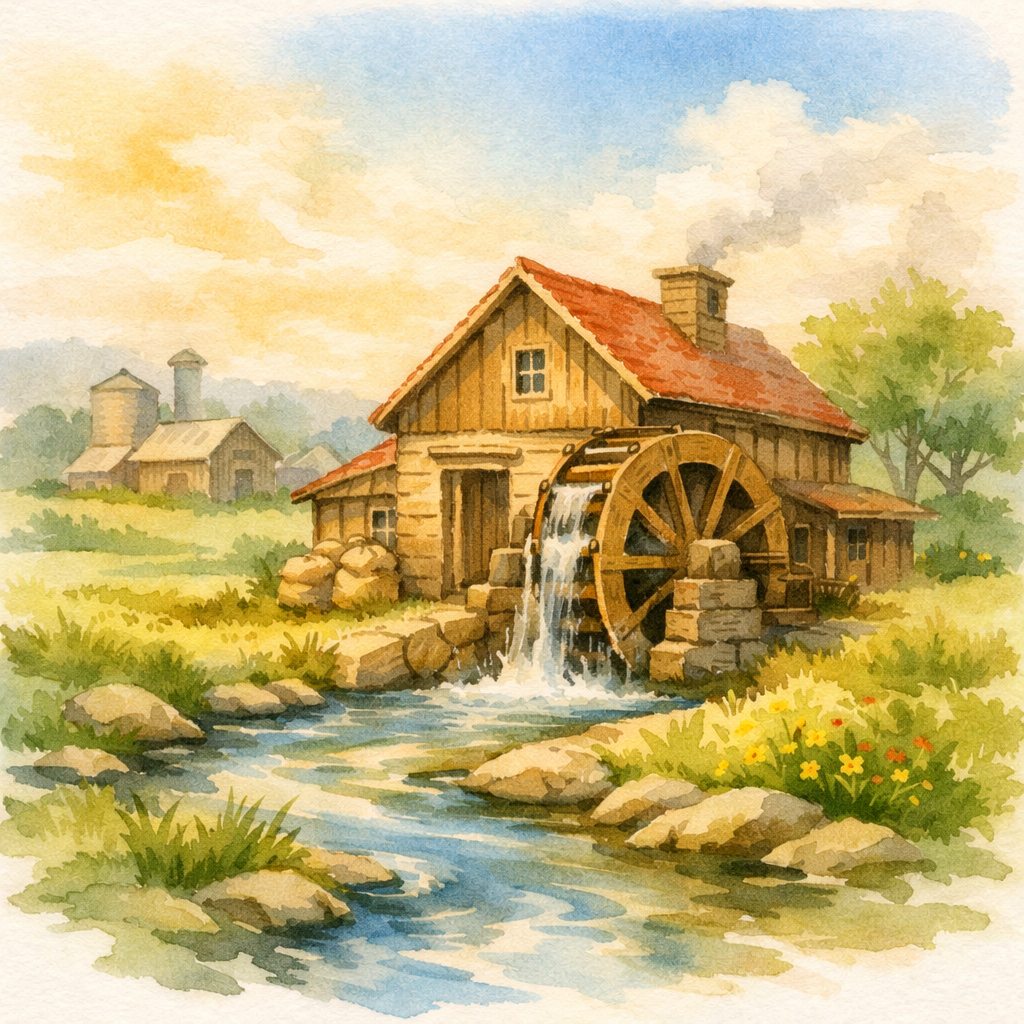
A business that earns while you sleep is the modern watermill. It turns labour into leverage and time into freedom. Whether it is a guesthouse, a consultancy, a farm, or a digital product, a business asset is a machine that converts your ideas into income. However, the best ones are ones you don’t sleep over, but manage in a hands-on way.
It is the investment that teaches you the difference between working for money and money working for you.
The best business assets are ones which you can overlook, and ones where your own knowledge and skills can be brought to bear by having them. A person with a trucker’s license gets more utility form buying his own truck that a person can get who buys one to hire out to a trucker, but cannot actually drive it himself. The best business assets shold be scalable, but also controllable.
A social benefit of this kind of investment is that it provides jobs for people who need them, and if you are very lucky you may receive some gratitude. However, the reality is that if a business is to be successful is needs a degree of commitment form employees, and not everyone is able to inspire this commitment without being taken for a bloodsucking slavedriving capitalist exploiter of the masses, so be warned.
Business assets can be a useful way to invest in times of economic distress, when cash is king. In order to do that you need good education (see point 5) and a store of cash ready. Then if you are at the right place at the right time, you can get some of the best bargains in your life, but it’s always good to take a good hard look at things, as there is often a reason beyond simple cash-flow issues why the assets is for sale at that price.
6. Art and Culture
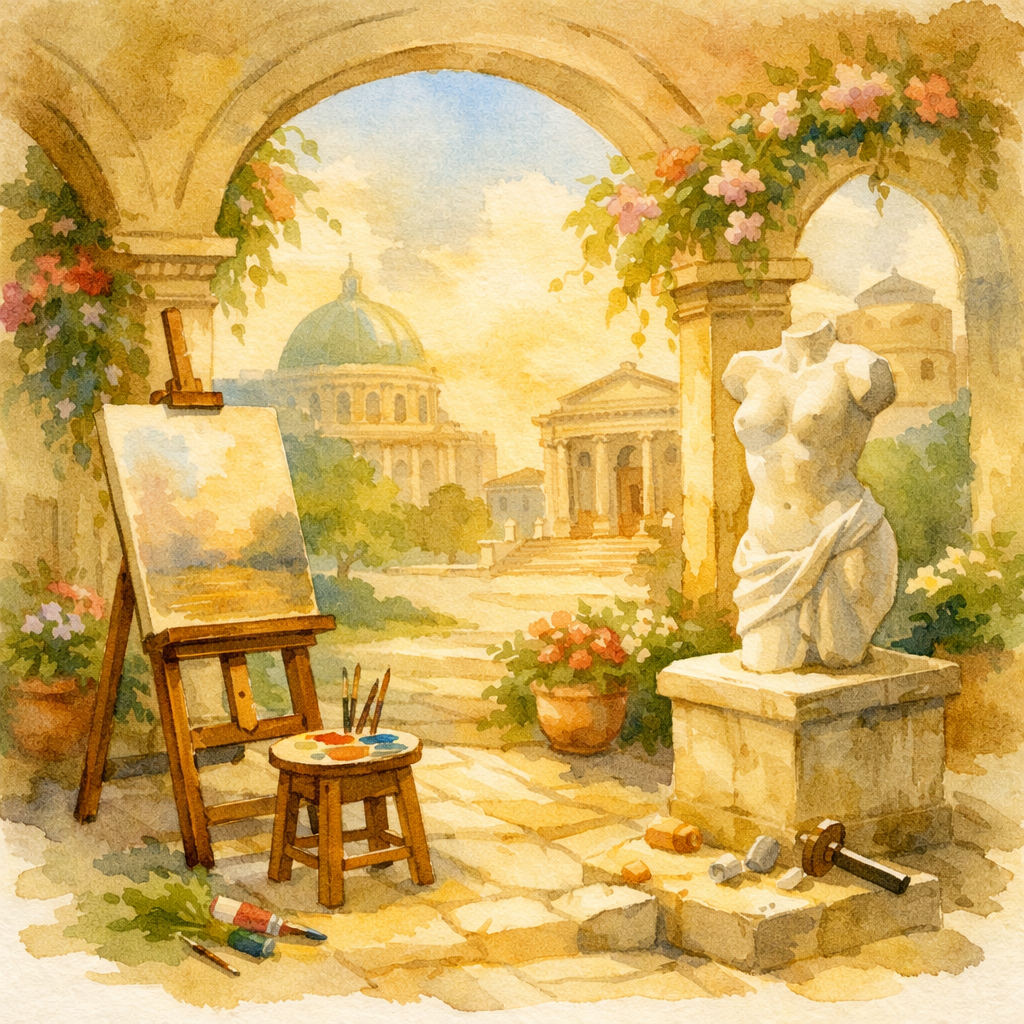
Not every return is measured in currency. Some investments enrich the soul, sharpen the mind, and connect you to the centuries. Art is civilisation’s memory. Culture is its bloodstream.
To invest in art — whether by collecting it, studying it, or creating it — is to invest in the part of yourself that cannot be taxed, inflated away, or stolen.
An investment in creating art or literature, fiction or non-fiction, can give rise to a stream of royalties which outlives you in a way other pensions tend not to.
Purchasing, sponsoring or co-creating art gives the value of having something worthwhile and durable which is a utility in itself.
5. Education — Yours and Your Children’s
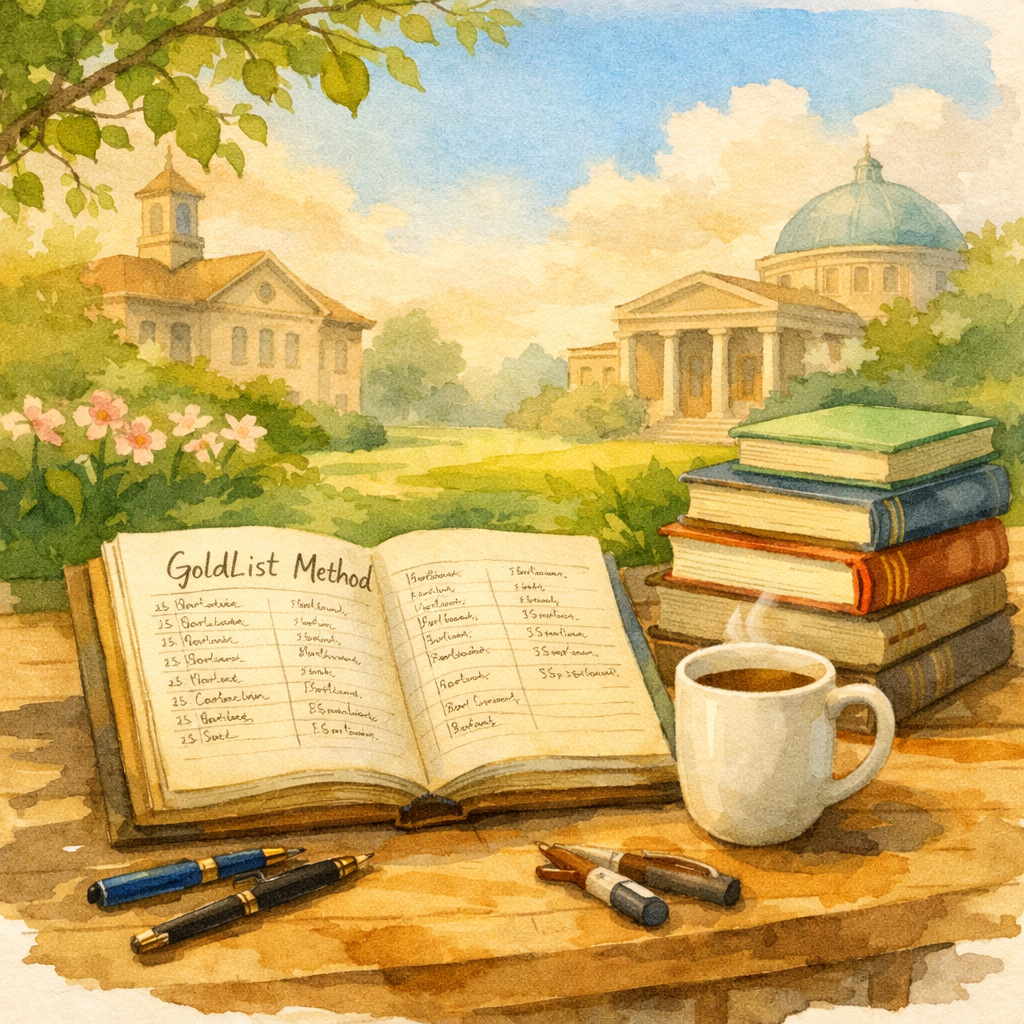
Knowledge compounds faster than money. Education expands your earning power, your worldview, and your resilience. It is the only investment that cannot be taken from you.
And when you invest in your children’s education, you are planting trees whose shade you may never sit under — but they will.
Investing in your own education enables you to do well at all the other forms of investment and to keep them in balance.
The GoldList Method is one of my gifts to humanity to assist people to get the most out of their time and money investments in learning. You can find out about it on http://www.huliganov.tv . You’re welcome.
4. Planning and Managing Your Private Pensions
Private pensions are the quiet giants of long‑term security. Tax‑efficient, compounding, and often neglected until it is too late. A well‑managed pension is a time machine: it moves today’s discipline into tomorrow’s comfort.
It is the investment that rewards you for thinking in decades rather than months.
It is usually one of the better deals a person can make in their lives as Companies pay part, and there are tax incentives. However, quite a lot of the money ends up in the pockets of people working in these Companies, and also beware of consultants who try to assist you with pensions. Many of these firms make a living by whittling away at your one, that you need in old age. They are not doing it for the sake of charity, for the sake of clarity.
3. Planning and Managing Your State Pensions
This is where the real leverage hides. Understanding contribution rules, delaying strategically, and maximising entitlements can add hundreds of thousands to your lifetime income.
A single decision — such as delaying your ZUS pension to the optimal age — can be worth more than a decade of saving. And for your spouse, the widow’s pension can be the difference between fragility and security.
State pensions are the investment that teaches you the power of knowing the rules of the system you live in.
And the time to be asking those questions is not when you are on the cusp of retirement.
Usually when it comes to delaying pension rights there is a curve on a graph as to the expected benefit and you need to be able to map ythat curve and how it shows the optimal strategy for you, bearing in mind how much you need to stop working, health-wise, your own expected longevity, whether or not you are likely to leave a widow and what the rules are for widow’s pensions in your jurisdiction. It gets complicated but being able to graph it for yourself is something that can make a huge difference to your whole twilight years experience.
2. Your Doctors’ Visits, Check‑Ups, and Blood Work

The best financial plan collapses if you die before you can claim it. Regular monitoring is not a medical expense — it is a risk‑management tool. It buys you time, warning, and the ability to act.
A blood test that costs 500 PLN can protect a pension worth hundreds of thousands. A check‑up that catches a problem early can give you the one thing money cannot buy: the chance to be part of the process.
This is the investment that protects all the others.
People in the past tended to die of war, of violence and of plagues. MOst of the people reading this are likely to die of either something which gives them no warning, especially heart attacks and strokes, or traffic accidents or violence, or, if they are lucky, something like cancer or dementia which gives you time to act. This is especially important if you are delaying pension rights in order to maximise the overall lifetime value of the pension. In some jurisdictions a widow’s pension for example is only based on a precentage of the pension of a husband already claiming it when he dies. If he hasn’t started climing it, in these jurisdictions the swidow gets nothing. So people in this situation must above all take care to cover their risk of circulatory diseases, as well as keeping themselves out of dangerous situations as far as they can. You get one death, and it ends up much of a muchness whether it’s a heart attack one night or cancer over several months, but from the point of view of financial planning, the death with a warning is preferable, if you get any say in it.
1. Fasting

The highest return on capital employed in human history. It costs nothing. It reduces inflammation, metabolic risk, cardiovascular risk, and the probability of sudden death — the only catastrophic risk in any retirement plan as outlined above.
Fasting is the cheapest, most powerful longevity hedge available to you. It is the investment that teaches you that discipline is a form of freedom.
Working on physical strength is another, working on physical strength using the principles of the Starting Strength Method by Mark Rippetoe is a tremedous investment in health also.
0. Accepting the Gospel

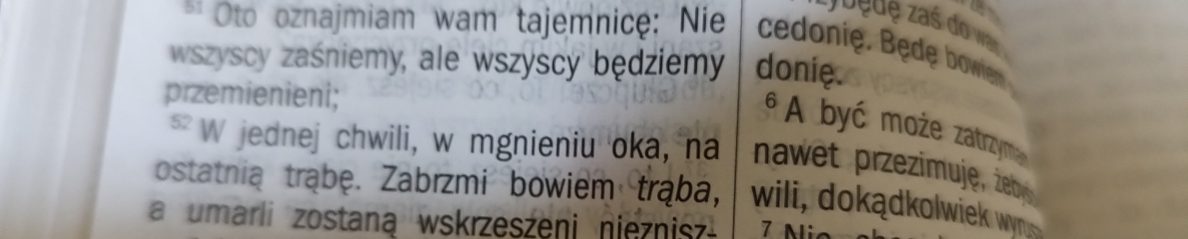
The investment that transcends all others. Everything above concerns the decades you have left. This one concerns eternity.
It is the only investment whose return is not measured in money, time, or health — but in meaning, hope, and the assurance that death is not the end of the story.
It is the investment that teaches you that the greatest wealth is not accumulated but received.
The Bible shows a way of being granted Eterenal Life and forgiveness of sins, Huge eternal rewards with no price, because Someone Else has borne that price, He did it on a wooden cross outside Jerusalem in the middle of the history of mankind, at the geographical crossroads of civilisations.
We know His name. It is Jesus. Jesus is the most important investment you can ever make, to the point where it makes perfect sense to invest your entire soul in Him.

