A Reflection in Response to the 2025 U.S. Government Shutdown
As the United States enters its first phase of government shutdown, since 2018, President Trump has made clear his intention: this is not merely a budgetary standoff, but a strategic purge. He has stated that the shutdown will serve as a “natural weeding-out process” for roles deemed unnecessary—a sentiment echoed by the Department of Government Efficiency (DOGE), now operating in post-Musk inertia.
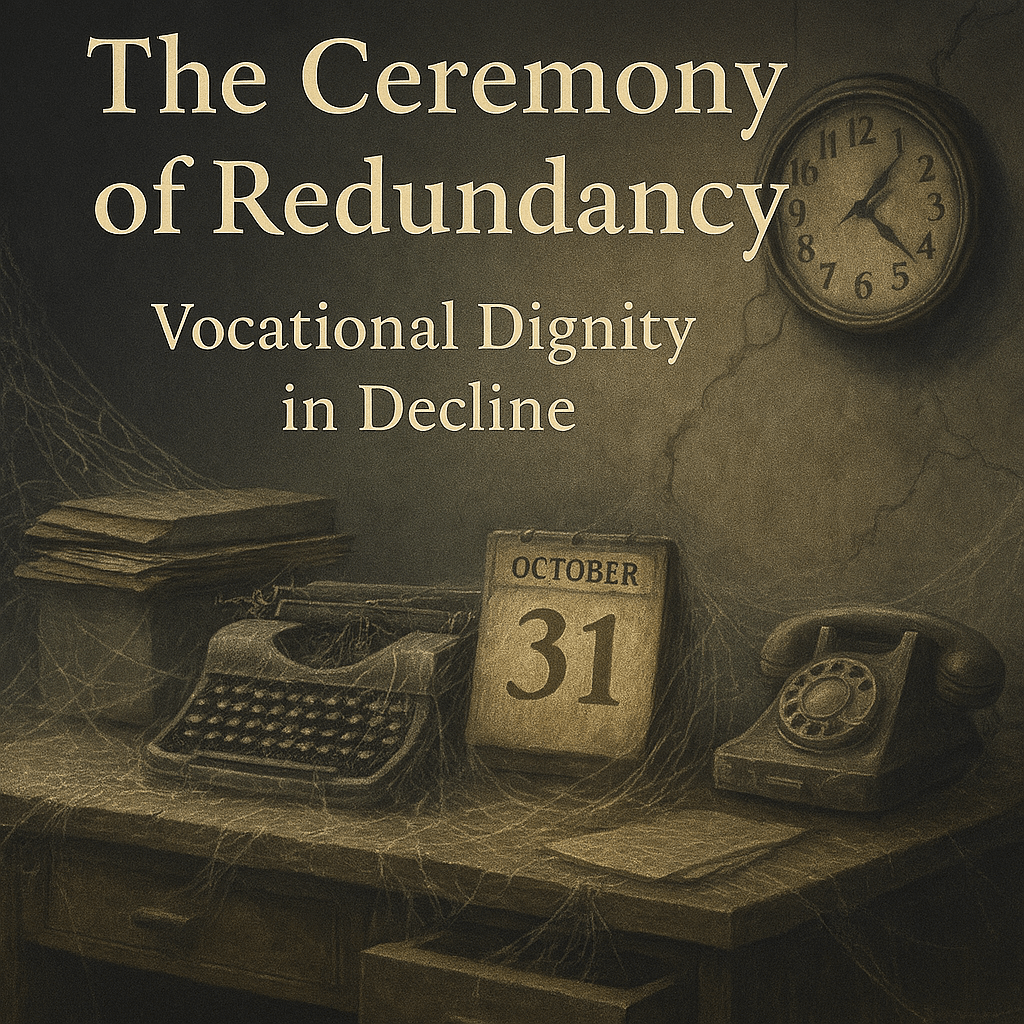
But beneath the political theatre lies a deeper societal wound: the erosion of vocational dignity when need becomes ceremonial, not operational.
When nations divide, it is often marked by conflict, hostility, and prolonged instability. Yet in 1993, Czechia and Slovakia achieved something extraordinary—their Velvet Divorce was a model of peaceful, diplomatic separation.
Despite its success, the architects of this historic moment—Václav Klaus and Vladimír Mečiar—were never recognized with the Nobel Peace Prize. In failing to honor their achievement, the international community has overlooked one of the finest examples of nonviolent resolution in modern history.
Why the Velvet Divorce Matters Today
The peaceful separation of Czechoslovakia was not merely a technical agreement. It was a bold diplomatic feat, proving that nations can change course without resorting to war. The lessons from CzeSK remain deeply relevant, especially as the world grapples with territorial disputes in places like Ukraine, where divisions remain sharp. Had the global community insisted on a structured, diplomatic separation rather than war, Ukraine might have had a different path forward—one that avoided the destruction we see today.
A Late but Necessary Nobel Recognition
More than 30 years have passed since the Velvet Divorce, but it is not too late to correct history. A retrospective Nobel Peace Prize for Klaus and Mečiar would elevate their achievement as a model for the future, reinforcing the idea that conflict can be avoided through careful negotiation, mutual respect, and structured separation.
A precedent exists—historical recognitions have happened before. A Nobel awarded for the Velvet Divorce would be unprecedented, but it would also be a sign of humility from the Nobel Committee—acknowledging a missed opportunity and reigniting conversation about diplomatic solutions to modern crises.
How to Make It Happen
We can bring this idea to the forefront by:
Starting petitions to formally request Nobel recognition.
Encouraging discussion among scholars, diplomats, and policymakers.
Highlighting the relevance of peaceful separation in ongoing conflicts.
The world needs more diplomatic solutions and fewer wars. Honoring the Velvet Divorce is a step toward ensuring history remembers the value of peace before conflict ever begins.
I hope this letter finds you well. I am writing to express my concerns regarding the recent changes to compulsory purchase orders (CPOs) and the concept of “hope value” in land valuation.
While I understand the government’s intention to manage public project costs effectively, I believe that excluding hope value from CPO compensation creates inconsistencies in land valuation practices. If hope value is excluded for CPOs, it should also be excluded from the valuation of land for business rates and council taxes. This would ensure a fair and transparent system, where landowners are not disadvantaged by contradictory valuation methods. If a business’s rateable value of land is low, then owners cannot complain if that becomes the basis for compensation on a CPO, and by the same token, the state should not be giving back a lower value than the one they themselves set for the purposes of council taxes. Government should be consistent, and I am not sure that provision for this has been included in the legislation.
Furthermore, I propose that a moral payment be considered to cover the costs of rearranging investments around the affected property. This would acknowledge the broader impact on landowners beyond the immediate land value.
The term “hope value” is a neologism and not one found in any accounting standards, national or international. Moreover, it seems designed to be used exclusively by the government in their own favor against private investors. If private investors were to insist that the aspirational aspect of value be removed from market values, no deal would ever be made. As such, this is a fresh case of state exceptionalism in an area where state exceptionalism is not warranted.
Consistency in valuation practices across different governmental processes is crucial to ensure fairness and maintain public trust. I urge you to consider these points and advocate for a more balanced approach to land valuation and compensation.
In the forthcoming UK elections, UK Citizens living abroad for more than 15 years can now register to vote. Will this make any difference to my feeling of whether or not I have a franchise in democracy?


 Quoracy Consulting & Publishing
You must be logged in to post a comment.